1876 The Battle of the Little Big Horn Participants: Army
“I guess we will get through them in one day” George Armstrong Custer
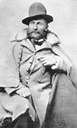
Captain Albert Barnitz
Captain Albert Barnitz
• Served with Custer in the Hancock expedition 1867, referring to him in a letter to his wife as a “petty tyrant”. Despite having admired Custer’s Civil War exploits he was very critical of his commanding officer.
• Recovered from serious wound received in hand to hand combat at the engagement on the Washita River 1868.
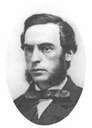
Captain Frederick William Benteen
Captain Frederick William Benteen
• Distinguished officer in many engagements of the Civil War
• Disliked Custer intensely,
• Criticised Custer for leaving Major Joel Elliot and his men at the River Washita engagement 1868
Brigadier General George Crook
Brigadier General George Crook
• Fought against the Yakima and Pitt River native Americans in Washington State and Oregon in 1855-6
• Distinguished service in the Civil War
• Fought Paiutes until their surrender in Snake River War 1866-8
• 1871-3 successful campaign using Apache trackers against the Chiricahua Apache
• 1876 led one of the three pronged attacks on the Lakota and Northern Cheyenne.
• Defeated at the Rosebud River Battle, strategic withdrawal covered by Crow scouts.
Captain Tom Custer
•Similar display of courage/ lack of fear to his brother during the Civil War, where he led successful charges, some against the odds.
• Injured at Sayler’s Creek 1865 bullet entered cheek and exited behind the ear but he fought on.
• Participated with older brother George in Hancock expedition 1867,Washita engagement 1868, Yellowstone expedition 1873 and Black Hills expedition 1874, as well as the final battle, after which his body was mutilated beyond recognition.( identification was only possible by tattoos, which included his initials.
Colonel John Gibbon
Colonel John Gibbon
• After the Civil War, Gibbon went west as part of the force sent to guard Union Pacific railroad workers from Indian attack.
• Commanded the western column from Fort Ellis which he moved eastwards along the banks of the Yellowstone River.
• Met General Terry on board of the steamer the Far West which was moored on Yellowstone River near to where it is joined by the Rosebud. Terry issued his orders to Custer and Reno. Gibbon was accompanied by Terry to block the area near the mouth of the Little Big Horn River.
Mark Kellogg
Mark Kellogg
• Reporter for the Bismarck tribune taken by Custer against orders
• Kellogg wrote "I go with Custer and will be at the death," which was accidentally prophetic since, of course, he was expecting a grand Custer victory, not his own demise.
Lieutenant Henry Moore Harrington
• Mrs Spotted Horn Bull, a full cousin of Sitting Bull stated in 1883 to the pioneer Press, St Paul, that a soldier had ridden off pursued by two Oglala, two Hunkpapa and a Brulé. “He gained on them all, and one by one they dropped off until the Hunkpapa, who was unarmed, as it turned out, alone pursued. The latter was about to give up the chase when the soldier turned, saw his pursuer, noted that his own horse was flagging, drew a revolver from the holster at his hip and blew his brains out.” Graham The Custer Myth p. 85. This may well have been Lieutenant Harrington.
Trumpeter Giovanni Martini
• John Martin was born in Italy emigrated to the USA in 1873 and enlisted in the army in 1874.
• Jun 25 1876Took the famous last message to Benteen from Custer: "Benteen, come on. Big village. Be quick. Bring packs. Sgd. Cooke. P. S.-Bring packs."
Major Marcus Albert Reno
Major Marcus Albert Reno
• 1875 given temporary command of seventh Cavalry in Custer’s absence.
• Sent out by Terry to scout the Powder River and Tongue River valleys for Lakota and northern Cheyenne.
• Subject to criticism after the Battle of the Little Big Horn, scapegoat or coward can both be sustained by the evidence.
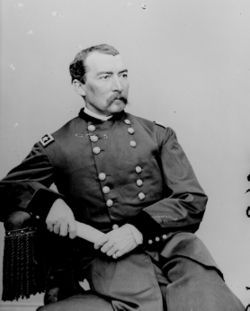
Major General Philip Henry Sheridan
Major General Philip Henry Sheridan
• In 1869, Sheridan succeeded William Tecumseh Sherman as commander of the Division of the Missouri, or Great Plains, which stretched from the Rocky Mountains to the Mississippi.
• Sheridan's policy of attacking the native Americans encampments during the winter, when their supplies and mobility were both severely limited. Sheridan moved first against the southern Cheyenne, Comanche and Kiowa of the southern Plains 1874-5, and then the Lakota and northern Cheyenne of the north 1876-7.
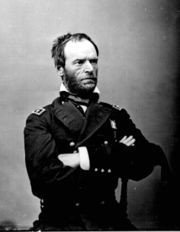
General William Tecumseh Sherman
General William Tecumseh Sherman
• Took overall command of the US army in1869.
• Sherman believed that “Indian policy“ should be the preserve of by the army, and that the aim of this policy was to keep the native Americans away from the routes used by emigrants, including the railroads.
• He dismissed the attempts of the peace commissioners in the 1860s as “the same old senseless twaddle”. The treaties did however give the Sherman the excuse of appearing to try to enforce their terms: to force the native Americans to stay on reservations.
Brigadier General Alfred Howe Terry
Brigadier General Alfred Howe Terry
• Served on the Commission which condemned the Sand Creek Massacre 1864
• one of a very few volunteer officers to gain promotion to Brigadier General during the Civil War, and to remain in the army afterwards.
• military commander of the Dakota Territory from 1866 - 1869 and 1872 to 1886
• Member of the Peace Commission which negotiated the Medicine Lodge Creek Treaty 1867
• Member of the Peace Commission which negotiated the Treaty of Fort Laramie 1868
• Member of the Peace Commission which negotiated the Fort Laramie Treaty 1868
• Terry became Custer's commanding officer in 1873, when the Seventh Cavalry was posted to the Dakotas.
• Commanded the advances into the Little Big Horn area 1876 led by Gibbon and Custer.